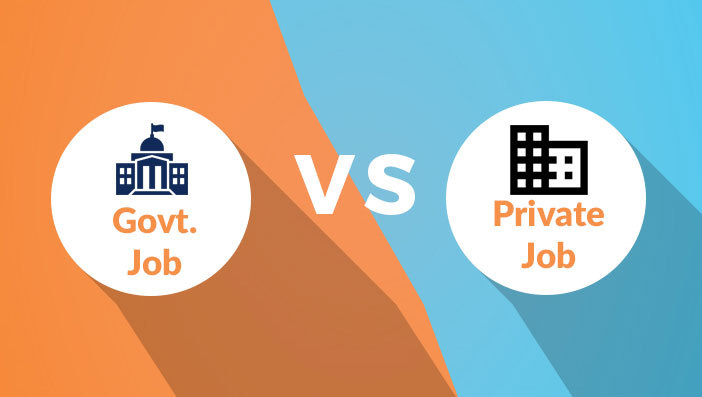
Choosing between a government job and a private job has always been one of the biggest career dilemmas—and in 2026, this decision is more complex than ever.
On one side, government jobs promise stability, security, and long-term benefits. On the other, private jobs offer higher salaries, faster growth, and global exposure. With automation, AI, remote work, and changing lifestyles, the traditional differences between these two paths are slowly blurring—but they haven’t disappeared.
So, which one is actually better in 2026?
This article breaks down government vs private jobs in 2026, comparing salary, job security, work-life balance, growth, stress, lifestyle, and future opportunities—so you can make a smart, informed decision based on facts, not myths.
Think of this as your career decision guide, not a one-size-fits-all answer.
Why This Comparison Matters More in 2026
The job market has changed dramatically in recent years.
Key Changes Impacting Career Choices
- AI and automation reshaping roles
- Rising competition in government exams
- Private sector volatility
- Remote and global hiring
- Changing lifestyle priorities
In 2026, choosing a career is less about “safe vs risky” and more about fit vs mismatch.
Understanding Government Jobs in 2026
Government jobs are often seen as the gold standard for security—but there’s more to the story.
What Counts as a Government Job?
- Civil services (IAS, IPS, IFS)
- Banking (SBI, RBI, IBPS)
- SSC & Railway jobs
- PSUs (ONGC, NTPC, BHEL)
- Teaching, healthcare, defense
Government jobs are structured, regulated, and long-term.
Understanding Private Jobs in 2026
Private jobs thrive on performance, innovation, and adaptability.
What Counts as a Private Job?
- Corporate roles
- Startups
- MNCs
- Freelancing & consulting
- Remote/global jobs
Private-sector careers are fast-paced and opportunity-driven.
Salary Comparison: Government vs Private Jobs
Let’s tackle the biggest question first—money.
Government Job Salary in 2026
- Moderate starting salary
- Fixed pay scales
- Annual increments
- Allowances (HRA, DA, TA)
- Pension benefits
Private Job Salary in 2026
- Higher starting packages (especially in tech)
- Performance-based hikes
- Bonuses, ESOPs, incentives
- No fixed upper limit
Verdict:
Private jobs usually pay more early. Government jobs pay steadily over time.
Job Security: Who Wins in 2026?
Government Jobs
- Extremely high job security
- Rare layoffs
- Transfers instead of termination
Private Jobs
- Performance-dependent security
- Layoffs possible during downturns
- Skill relevance determines survival
Verdict:
Government jobs clearly win on job security.
Work-Life Balance Comparison
Government Jobs
- Fixed working hours
- Limited overtime
- More holidays
- Predictable routine
Private Jobs
- Longer working hours
- Deadline pressure
- On-call expectations (especially in tech)
Verdict:
Government jobs generally offer better work-life balance.
Career Growth and Promotions
Government Job Growth
- Time-based promotions
- Limited competition
- Slower career acceleration
Private Job Growth
- Merit-based promotions
- Faster growth for performers
- Frequent role changes
Verdict:
Private jobs offer faster career growth for high performers.
Skill Development Opportunities
Government Jobs
- Role-specific skills
- Limited exposure to new tech
- Less pressure to upskill
Private Jobs
- Continuous learning
- Exposure to new tools
- Skill relevance is critical
Verdict:
Private jobs push you to grow faster.
Stress Levels: Which Is More Stressful?
Government Jobs
- Exam preparation stress (initial phase)
- Less daily pressure after joining
Private Jobs
- Performance targets
- Job uncertainty
- Workload pressure
Verdict:
Government jobs are stressful before entry; private jobs are stressful after entry.
Work Location and Transfers
Government Jobs
- Frequent transfers
- Rural or remote postings possible
Private Jobs
- Location flexibility
- Remote work options
Verdict:
Private jobs offer more control over location.
Lifestyle and Social Respect
Government Jobs
- High social respect
- Authority and recognition
- Community influence
Private Jobs
- Status depends on company and role
- Recognition is professional, not social
Verdict:
Government jobs still carry stronger social prestige.
Retirement Benefits and Long-Term Security
Government Jobs
- Pension or NPS
- Healthcare benefits
- Lifetime financial security
Private Jobs
- EPF, gratuity
- Personal savings and investments required
Verdict:
Government jobs win for retirement security.
Competition Level
Government Jobs
- Extremely high competition
- Limited vacancies
- Years of preparation
Private Jobs
- Skill-based competition
- Multiple entry points
- Faster hiring cycles
Verdict:
Government jobs are harder to enter; private jobs are easier to switch.
Impact of AI and Automation
Government Jobs
- Slower automation
- More protection from disruption
Private Jobs
- Rapid automation
- Skill-based survival
Verdict:
Government jobs are safer from automation—but not immune.
Who Should Choose Government Jobs in 2026?
Government jobs are ideal if you:
- Value job security
- Prefer stability over high risk
- Want work-life balance
- Are comfortable with slow growth
- Can handle exam competition
Who Should Choose Private Jobs in 2026?
Private jobs are ideal if you:
- Want high income potential
- Enjoy fast-paced environments
- Like learning new skills
- Prefer location flexibility
- Are comfortable with change
Can You Switch Between Government and Private Jobs?
Private to Government
- Possible but difficult
- Requires clearing exams
Government to Private
- Easier if skills are relevant
- Common in PSUs and tech roles
Career switches are possible—but planning matters.
Hybrid Careers: The New Middle Path
In 2026, hybrid careers are rising.
Examples
- PSU jobs (government + corporate benefits)
- Contract-based government tech roles
- Consulting for public-sector projects
Hybrid paths offer the best of both worlds.
How to Decide: A Simple Checklist
Ask yourself:
- Do I value security or growth more?
- Can I handle exam pressure?
- Do I enjoy structured or flexible work?
- What lifestyle do I want?
There’s no “better” option—only a better fit.
Conclusion
In 2026, the debate between government vs private jobs isn’t about which is superior—it’s about which suits you.
Government jobs offer stability, respect, and long-term security.
Private jobs offer speed, money, and global exposure.
Choose based on your personality, priorities, and risk tolerance, not social pressure.
A successful career isn’t about the sector—it’s about alignment.
FAQs
1. Which is better in 2026: government or private job?
Neither is universally better. It depends on your goals, skills, and lifestyle preferences.
2. Do private jobs pay more than government jobs?
Yes, especially in the early years, but government jobs offer long-term financial security.
3. Are government jobs losing relevance?
No. They are evolving with technology and remain highly respected.
4. Can private jobs be secure in 2026?
Yes, if you keep your skills relevant and adaptable.
5. Which option is better for work-life balance?
Government jobs generally provide better work-life balance.